
Dental surgery is a procedure the best dentist turns to in order to remove a tooth or molar that cannot be repaired with fillings or other means, because it may be buried under the gum, badly shattered, or have root deformities. In these cases the dentist needs intravenous anesthesia instead of local, and in some cases turns to general anesthesia. Here we learn everything about dental surgery.
What is dental surgery?
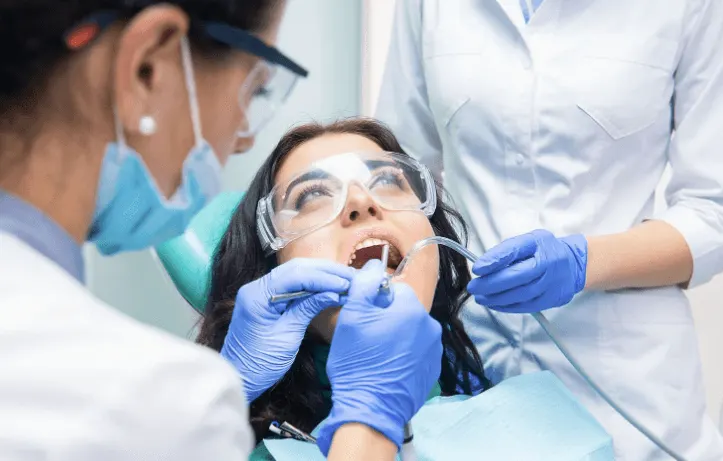
It is a surgical procedure the dentist turns to in order to extract a molar, and it has three types:
- Gum incision: when there are impacted teeth or to reach the bony part by cutting the gum to make more room to carry out the procedure.
- Sectioning the tooth: when the dentist has difficulty removing the whole tooth, the tooth is cut into pieces so each piece can be removed separately.
- Cutting bone: when the dentist needs a better view of the tooth, the dentist removes or cuts part of the bone to make more room.
Cases in which the best dentist turns to dental surgery
There are some cases in which the best dentist extracts a molar by surgery, such as:
- Removing a stuck root tip.
- A molar that is shattered or badly broken.
- When the molar is impacted, such as the wisdom tooth.
- When the bone tissue is inflexible or dense.
- When the molar’s root is deformed, such as a very long or curved root.
What is impacted tooth surgery with the best dentist?
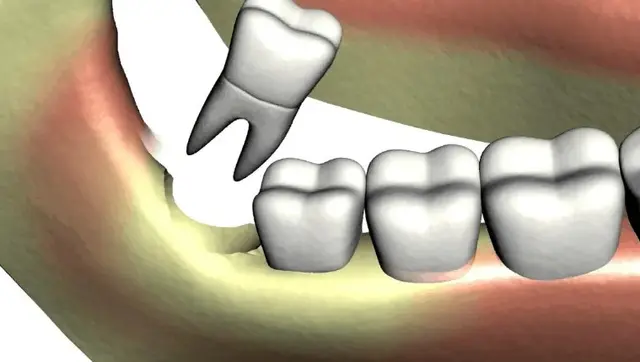
An impacted or wedged molar is a tooth that is not in its correct position, but is below the gum or still in the bone tissue of the jaw. One of the best-known examples of an impacted molar is the wisdom tooth, and there are three types of impacted tooth surgery:
- Soft tissue impaction: the molar is buried directly under the gum, so the best dentist cuts the gum with a sterile scalpel, which exposes the molar, and uses conventional techniques to extract it, then stitches the gum.
- Complete bony impaction: one of the most complex and difficult types of molar extraction, where the molar is completely submerged in the jawbone. The dentist cuts the gum and cuts small pieces of the bone surrounding the molar, and sometimes cuts the molar into pieces to make it easier to remove.
- Partial bony impaction: half the molar is covered by bone tissue and the other half by soft tissue. The dentist cuts the gum, then cuts away parts of the bone tissue around the top of the molar, the molar is removed, and the gum is stitched.
How dental surgery is done
- Preparations for dental surgery: the best dentist will take X-rays, and you must tell the dentist about all the medicines you take if you suffer from any of the following conditions:
- High blood pressure
- Kidney and liver disease
- A congenital heart defect
- A weak immune system
- Diabetes
- A weakened immune system
- Bacterial endocarditis
- Antibiotics before the procedure: only in the following cases:
- Gum inflammation and swelling
- Some medical conditions
- If the procedure is expected to be long
- A weakened immune system
Precautions before dental surgery by the best dentist

- Refrain from smoking
- Wear loose, comfortable clothing
- Fast for at least 6 or 8 hours before the procedure
- Have a friend or a family member with you to take you home
Tips after dental surgery
To avoid complications and speed up healing, follow these instructions:
- Drink plenty of fluids and eat food that is easy to chew
- Rest the mouth after the procedure and avoid unnecessary talking
- Avoid eating and drinking before the bleeding stops
- Do not use a toothbrush for at least 12 hours after the procedure
- You can use mouthwash or salt solution instead of a toothbrush
- To speed up healing, follow everything the dentist prescribed after the procedure
Reasons for dental surgery in children
Some children may need dental surgery, such as:
- Tooth decay: this is the most common problem in children. It is often the result of eating too many sweets before bed, not cleaning the teeth well and not taking care of them, and it can sometimes reach a severe stage of decay.
- A tooth injury: through children’s physical activities, if they have an accident while playing without wearing a guard to protect the jaw, this may cause the teeth to shatter, and the dentist turns to extracting the teeth by surgery.
- Infection: this happens when decay is not treated for a long time. It can reach a serious stage and the infection reaches the roots, which may lead to extraction of the teeth by medical surgery.
Price of dental surgery
- A normal molar extraction costs 1,000 Egyptian pounds.
- A surgical molar extraction costs 3,000 Egyptian pounds.
- A child’s molar extraction costs 600 Egyptian pounds.
Each case differs from the other in terms of procedure, surgery and cost.
Factors affecting the price of surgical molar extraction
The price of extracting a molar may depend on these factors:
- The type of extraction (surgical, normal).
- The number of teeth that must be extracted.
- The dentist’s experience.
- The location of the tooth to be extracted.
- The type of anesthesia in dental surgery (general, intravenous or local)
Tips on caring for oral and dental health
- Make sure to brush your teeth twice a day.
- Take care to clean the tongue too, because it keeps a person’s health sound.
- Use a toothpaste containing fluoride.
- Clean the teeth with floss and toothpicks to make sure food remains are removed.
- Use a mouthwash, which helps promote the health of your teeth.
- Avoid smoking and artificially colored foods.
- See your dentist regularly to ensure the health of your teeth.
Also read: Toothache in children
The best-known dentists in Egypt

- Dr. Baher Ashraf: maxillofacial surgery specialist in Nasr City
- Dr. Ahmed El-Malwani: specialist in fillings and root and nerve treatment in 6th of October City.
- Dr. Reham Farouk: orthodontics specialist in New Cairo.
- Dr. Youssef Wagdy: root and nerve treatment specialist in Maadi.
- Dr. Abdullah Mansour: specialist in fillings for root and nerve treatment in Nasr City.
- Dr. Mohamed Kamal: gum treatment specialist in New Cairo.
- Dr. Mohamed El-Saadany: specialist in dentistry for the elderly and cosmetic dentistry in Mansoura.
- Dr. Mohamed Atta: orthodontics specialist in Haram.
- Dr. Khaled Ashoush: cosmetic dentistry specialist in Abdeen.
- Dr. Mohamed Hadidi: dental implant specialist in Rehab City.
- Dr. Salim Gouda: dental implant specialist in Alexandria.
So, dear reader, I hope I have made clear what dental surgery is and everything related to this topic. We have now reached the end of this topic, and I hope I did justice to this important subject, covering its basics, explaining its concepts and everything related to dental surgery.
This article is for general education and is not a diagnosis or a substitute for advice from your dentist.