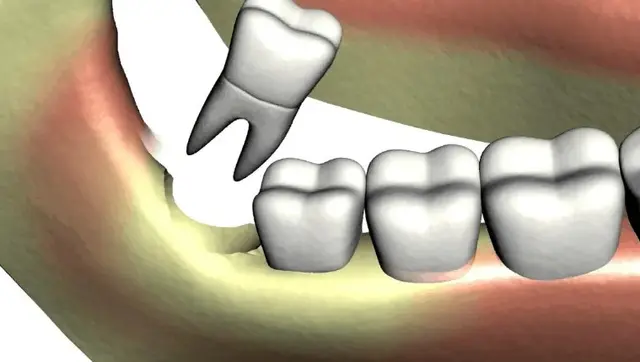
Wisdom tooth surgery is carried out by a number of people because of the pain they feel from any problem with it. The wisdom tooth is also one of the molars that appears late in an adult.
It is counted among the incisors, but despite coming in late it is exposed to many problems. In this article we learn about wisdom tooth surgery in detail, and a lot of information about this type of molar.
And the reasons for the surgery a person undergoes to have this molar extracted, as follows.
What is a wisdom tooth?
Before we learn about wisdom tooth surgery, let us first learn about the wisdom tooth, also called the third molar, as it is the last of the permanent molars to come in in the mouth.
This molar comes in at an age between seventeen and twenty-five, and it does not necessarily come in for everyone.
In addition, many people never get this type of molar in their whole lives, and many other people have this type of molar come in perfectly well.
Without any problem with it, like the other permanent molars in the mouth.
It is worth noting that some wisdom teeth do not grow properly, which causes a lot of pain for their owner, as they grow only partially rather than completely.
This is what is called an impacted or buried molar. This molar also has no connection at all with the human mind, but it got this name because it grows during the period of a person’s adulthood.
What is an impacted wisdom tooth?
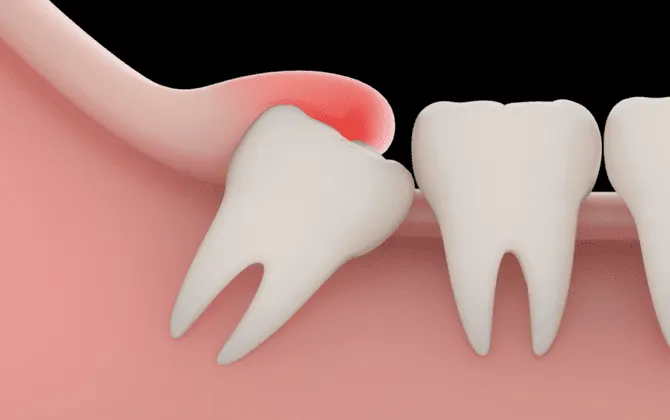
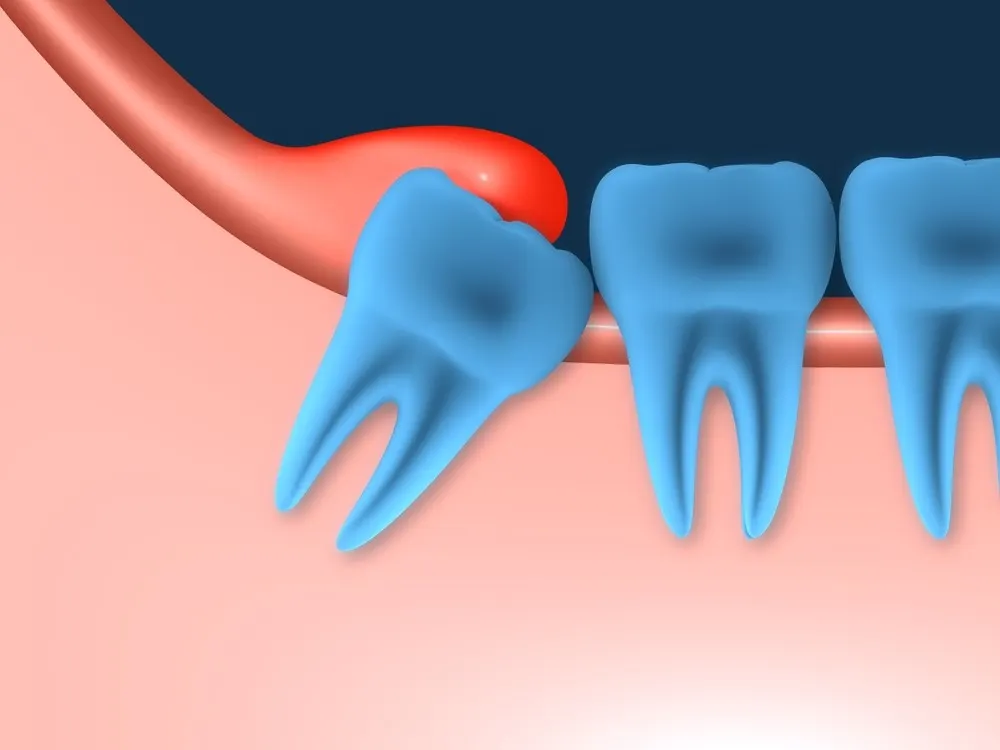
As we mentioned in the previous paragraph, an impacted molar is a wisdom tooth that grows only partially, and the remaining part of it is buried inside the person’s gum. It has a number of different characteristics, which are as follows:
- It grows in the direction of the molars next to it.
- This molar comes in at the angle pointing toward the back area inside the mouth.
- This type of molar comes in properly only when the molar extends into the bone inside the mouth in general.
- The molar often grows quite straight, like the rest of the molars in the mouth, and despite that it is one of the molars trapped within the bones of the mouth.
What are the complications of an impacted wisdom tooth?
Through learning about wisdom tooth surgery, we learn about some of the complications the patient is exposed to when an impacted molar grows inside the jawbone. These complications are as follows:
- The patient feels a lot of pain in the area of the mouth where this molar is.
- Some pieces of different foods can get in behind this molar, which leads to the patient feeling a lot of pain.
- The patient is exposed to an infection in their mouth because of this.
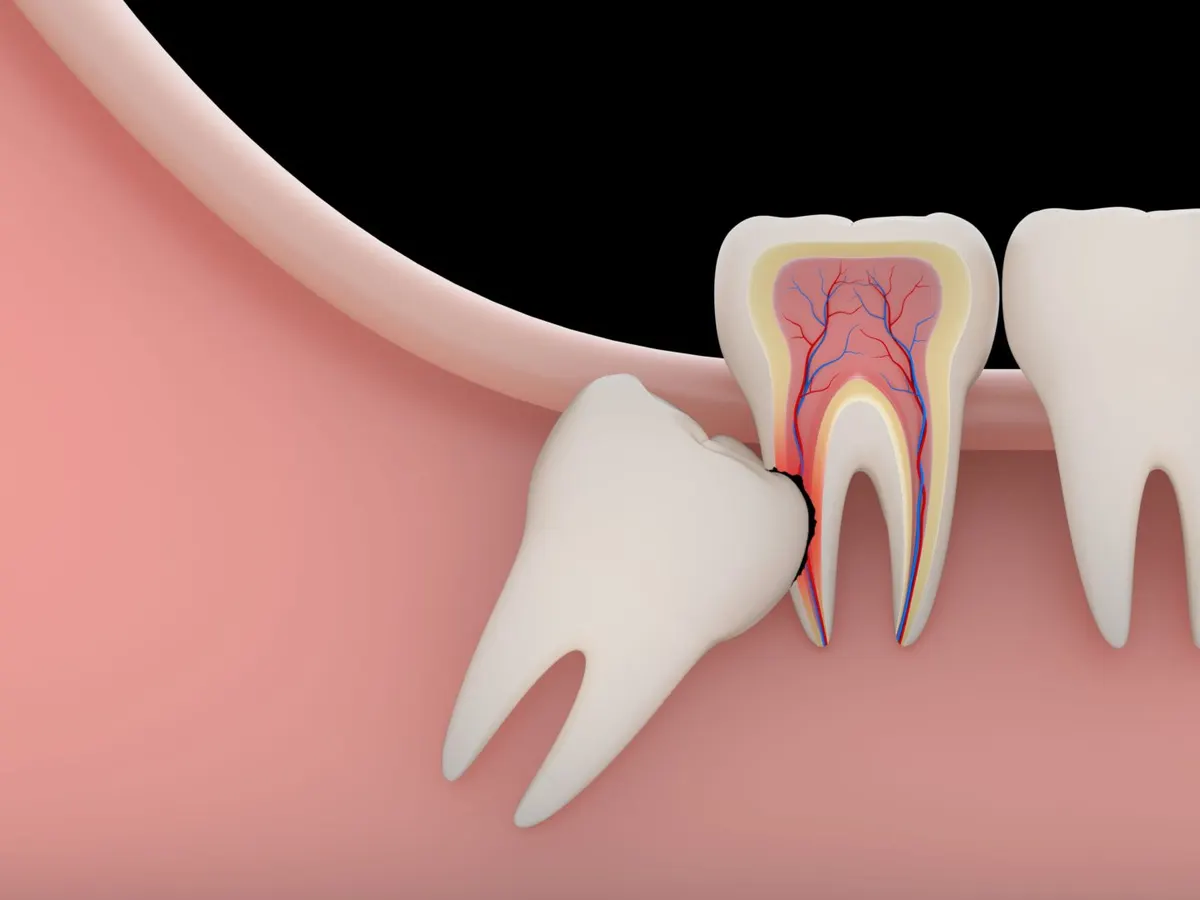
- The molar next to the wisdom tooth can be affected.
- The bones in the area where the molar is can also be exposed to infection, which makes the patient feel a lot of pain.
- A cyst may appear around the molar, and this cyst contains an amount of fluid.
Wisdom tooth surgery
When the patient experiences the complications mentioned in the previous paragraph, they mainly turn to wisdom tooth surgery. This surgery helps the patient get rid completely of those bony parts buried inside the jaw of the mouth, and also gets rid of all the pain for good.
In some cases within this type of surgery, the dentist may cut the molar into two or three pieces to make it easier to extract properly.
There are also a number of cases that may need some surgical stitches, which take two weeks to disappear completely, and some other cases may undergo this type of surgery fully under anesthesia.
Types of anesthesia in wisdom tooth surgery
As we mentioned, some cases need wisdom tooth surgery, and this is done under anesthesia. There are several different types of anesthesia, which are as follows:
1- Local anesthesia
In this type the patient receives an injection just once, or the injection may be given several times, in the area around the molar, using a substance that causes numbness in the area of the molar so that it can be extracted easily and simply.
2- Sedation anesthesia
This is a type of anesthesia used in wisdom tooth surgery. The patient is injected with this sedative through a vein, with the aim of calming the area where the wisdom tooth is.
This allows it to be extracted simply, and some patients may also need local anesthesia.
3- General anesthesia
Some particular cases need full anesthesia. This is done by the patient inhaling the medicine through the mouth, or it may be injected into a vein, so that the patient loses consciousness and the molar is extracted without the patient feeling any pain.
Steps of wisdom tooth surgery
There are some steps the dentist takes in the procedure of extracting a wisdom tooth in general. The steps are as follows:
- The dentist first makes a surgical incision in the tissue inside the gum to expose the bone and teeth in that area.
- The bone that prevents the dentist from reaching the roots of the tooth is removed.
- After the previous stage, the dentist extracts the molar completely.
- The wound is cleaned of all remaining parts in the place, and this is one of the most important steps the dentist takes in the surgery.
- The dentist then closes the wound so that the wound heals very quickly.
- At the end a piece of gauze is placed over the place where the molar surgery took place, to fully control the bleeding resulting from this surgery.
- This gauze also helps a blood clot form in the place of the wound so it heals completely as quickly as possible.
Also read: What to look for in a pediatric dentist
In conclusion of our article, we have learned about wisdom tooth surgery, as well as the steps that help finish this procedure and the main types of anesthesia the patient may undergo in this kind of surgery.
This article is for general education and is not a diagnosis or a substitute for advice from your dentist.